
Hi — Mehran here. Welcome back to Subvrt, my newsletter on smarter organising. I’m trying out a new format: the article, followed by five things worth reading, one post from the archive, and a last thought. See what you think and hit ‘reply’ with any feedback. Cheers.
If we want to confront power, we need to know how it works.
This week I sat down with Yanis Varoufakis and the commentator Arnaud Bertrand to talk about Venezuela, Greenland, and the new phase of US Empire.
Here are my take-aways for organisers: what’s changed, and where it gives us openings.
What’s changed, exactly?
The US now uses force and coercion without pretending otherwise. It’s openly treating Venezuela as an oil asset; it’s saying international law is secondary. And Europe is scared to push back.
Remember how the US used to dress up its interventions in moral language — Clinton bombing Serbia for “humanitarian” reasons, Bush liberating Iraqis from their dictator? Well, that era is over. Washington now says what it means: it can depose governments, take resources, and kill civilians if it wants to. The Western hemisphere — which includes Greenland and Venezuela — is “its” domain.
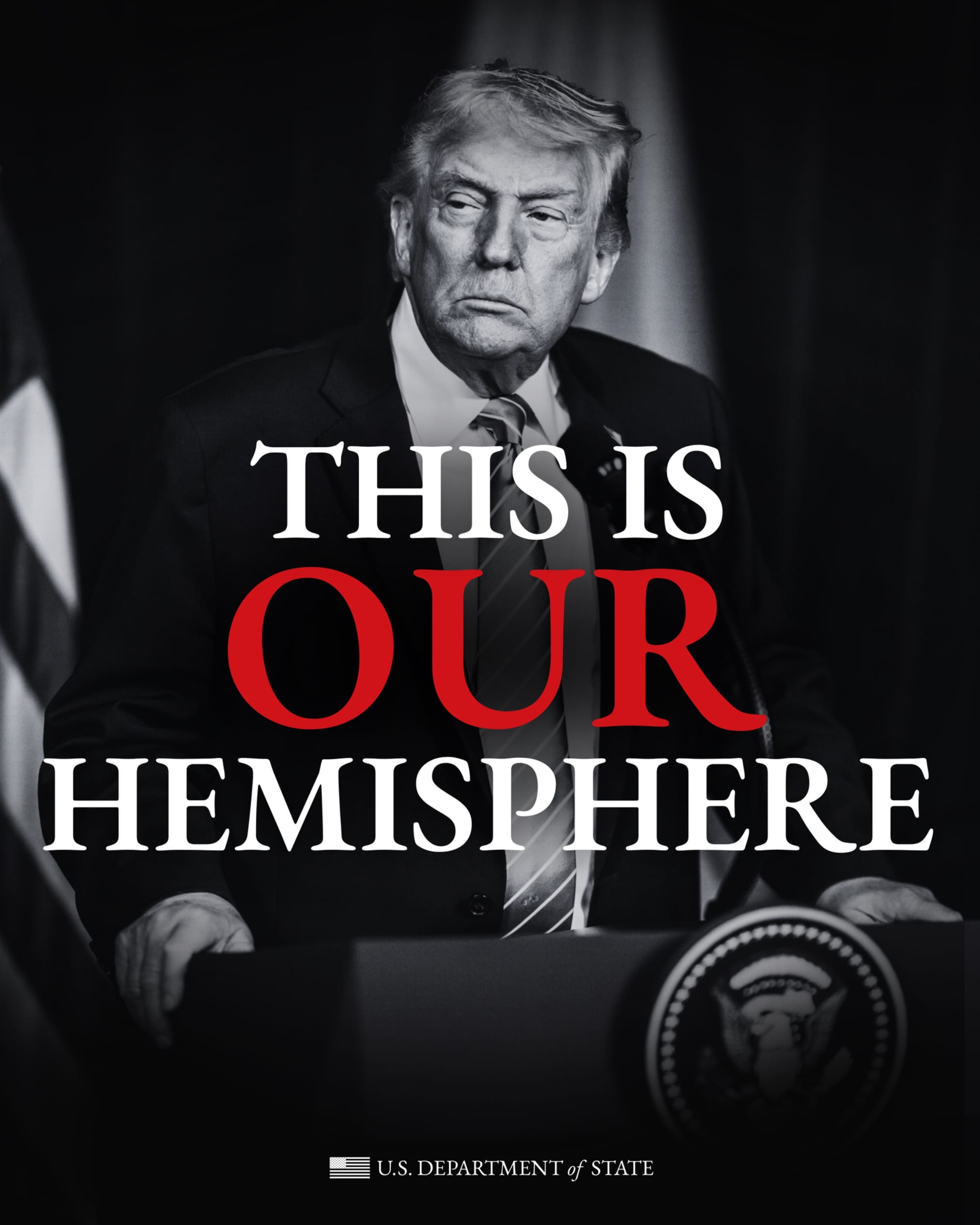
This shift didn’t come out of nowhere — the 2025 US National Security Strategy telegraphed it. And the opening weeks of 2026 crystallised it. As I write, Trump is still signaling that a US attack on Iran could be imminent.
What’s new isn’t the US’ behaviour, it’s the honesty. And that honesty removes ambiguity. Which creates opportunities.
The pitch just got simpler
One of our goals as organisers is to persuade people to act with us. That job gets easier when power states its motives outright.
There’s nothing to “unmask” or “expose”; no virtuous narrative to dismantle. If someone just woke from a cryo chamber we could explain today’s US imperialism to them in one line.
That wasn’t possible during the era of polite interventions.
The chain of complicity is now more visible than ever
Our targets just got sharper.
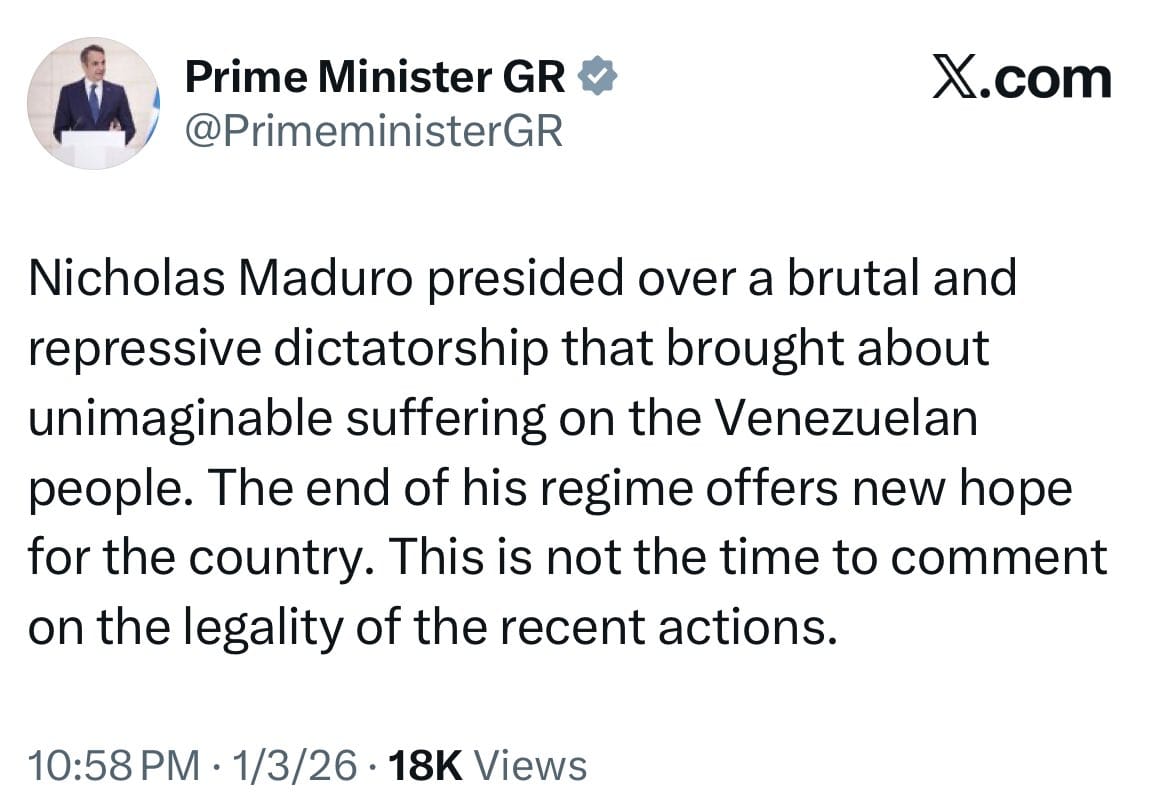
The governments and their mouthpieces helping the US are now doing so in full daylight. European elites and media aren’t even pretending to be neutral; watch them struggle to repeat US lines on Venezuela as if they were analysis. That strained hedging is a weakness we can exploit.
Contrast this with Gaza, where governments could still hide behind “self-defence” after October 7,” “complexity,”and the fog of debate. With Venezuela there’s no fog at all: a kidnapping is a kidnapping. A government or commentator that denies this is simply complicit.
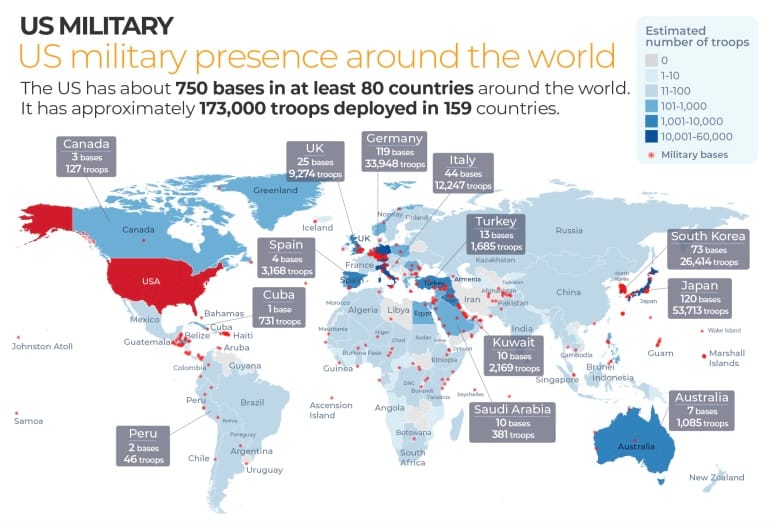
And this new clarity goes well beyond the talking points; it applies to the machinery that enforces the doctrine itself. That means: the access to ports that other countries grant the US for supplies; the airspace for overflights, the data, the finance, the political cover. None of this is new. What’s new is the honesty about what it’s all for.
We can map every node of this, every time. And reuse it whenever the US throws its weight around.
Corporate winners are now exposed
When Venezuela happened, oil stocks jumped immediately: Halliburton, Chevron and others rallied on the news. If Trump moves on Greenland, as he’s announcing, we’ll likely see the same with rare-earth and mining companies with interests there.
These firms stand to profit directly from the US’ illegal raids. Their offices, suppliers, investors — including pension funds — are weak spots. And are now fair game.
We can name them, and target them.
Holding elites to account just got easier
International law and institutions are now officially useless at restraining the empire. But on the other hand: they’ve never been more powerful at stripping away its elite cover.
Case in point: South Africa’s ICJ case, which put a global spotlight on Israel’s atrocities in Gaza, narrowed its supporters’ room to lie… and helped to flatten Israel’s global support.
Trump’s actions just made it harder for other governments to dodge the question was this action legal under the UN Charter? Their inevitable non-responses will help shatter their credibility and their support. That should be our default question at protests, in Q&As, and in clips.
The case for a radical line is now more obvious
European leaders have tied themselves to Washington so tightly that even mild dissent is off-limits. So if they can’t speak up during this, they won’t speak up during anything else.
That should shatter our illusions that any organising strategy built on “appealing to their conscience” or “finding courage” can ever work. Lobbying and citizens’ initiatives won’t restrain the new US imperial doctrine. Those in power who are facilitating it need to be brought down — and replaced.
That means building real cost today. And starting the pipeline that gets local office-holders elected who will refuse complicity — on overflights, bases, political cover, all of it.
Five years from now, Europe needs officials who will say “no.”
A new domestic front just opened
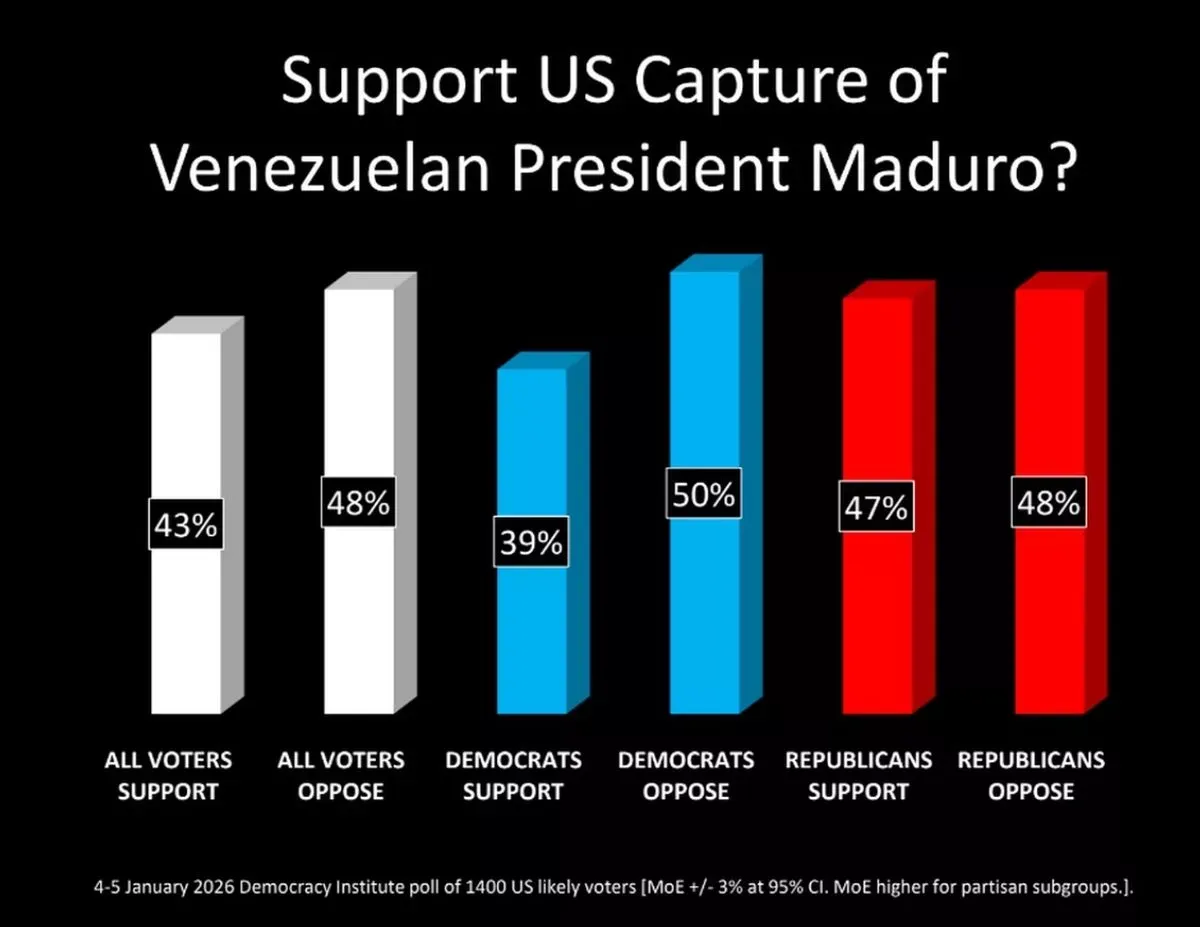
Open empire also has trouble at home. US polling shows majorities opposed to Trump’s foreign adventures. That’s another pressure point.
And there’s fertile ground beyond the usual anti-war circles — independents, moderates, even parts of the Republican base are against these interventions. We can use that.
A final thought on the implications
The honesty of Open Empire can bring new clarity to our organising. And the easiest place to start would be a shift in our rhetoric — away from values-first appeals and towards making the material case for opposing the US.1
That means stopping saying that we’re against US foreign policy because it’s immoral or racist (though it is). And instead saying it’s because Open Empire makes us less safe, drains public money, destabilises entire regions, and locks us into permanent crisis. Because it hurts ordinary people everywhere.
Making the material case means showing our audiences what they stand to lose. It drags us out of the moral frame where we’re always on the defensive. It also makes it harder for elites to smear us as naive or emotional.
This is how we can build a broad coalition that doesn’t just protest, but forces governments to change course.
* * *
Notes
1: I’ve written more about this values-first vs material-first split, and what it means for organising, in a piece for Waging Nonviolence. It should be out soon.
Five things worth reading
I’ve been thinking a lot recently about AI, online spaces and what our optimal outreach strategy should be as organisers. Here are some articles I found illuminating:
 Ryan Broderick
- Ryan Broderick on power as spectacle. Implications for us: we have to treat the attention economy as a battlefield, not a backdrop. Fleeing to online safe spaces or the “dark forest internet” is appealing, but will cede space to our opponents.
- Freddie De Boer on how LLMs would rather invent whole worlds than admit they don’t know. Outsource your judgment to them at your peril (check every source link!)
- Lulu Cheng Meservey explores how the answer to AI slop is real things in the real world, over time. Wins people can feel. Silicon Valley knows this, and so should we.
- Gurwinder Bhogal makes a similar point: our information environment is collapsing into noise. So build small, high-trust spaces, test messages with real humans offline, and pick a few hard problems to act on (act on what you can influence, play the long game).
- And for fun: Conde Nast forgot to renew a trademark. So a group of journalists grabbed it and turned it into a newsletter. Proof that we can still seize and rebuild abandoned cultural spaces – if we move early and are smart.
From the archive
Winning doesn’t always come from grand strategy; sometimes small tweaks make the difference. That’s why it’s worth paying attention to typography which, when used right, is an activist’s secret weapon. I put together some simple tips to improve your type fast.
One more thing
The rise of the far right is a warning. The lesson is how they organised. Study methods, not vibes.