
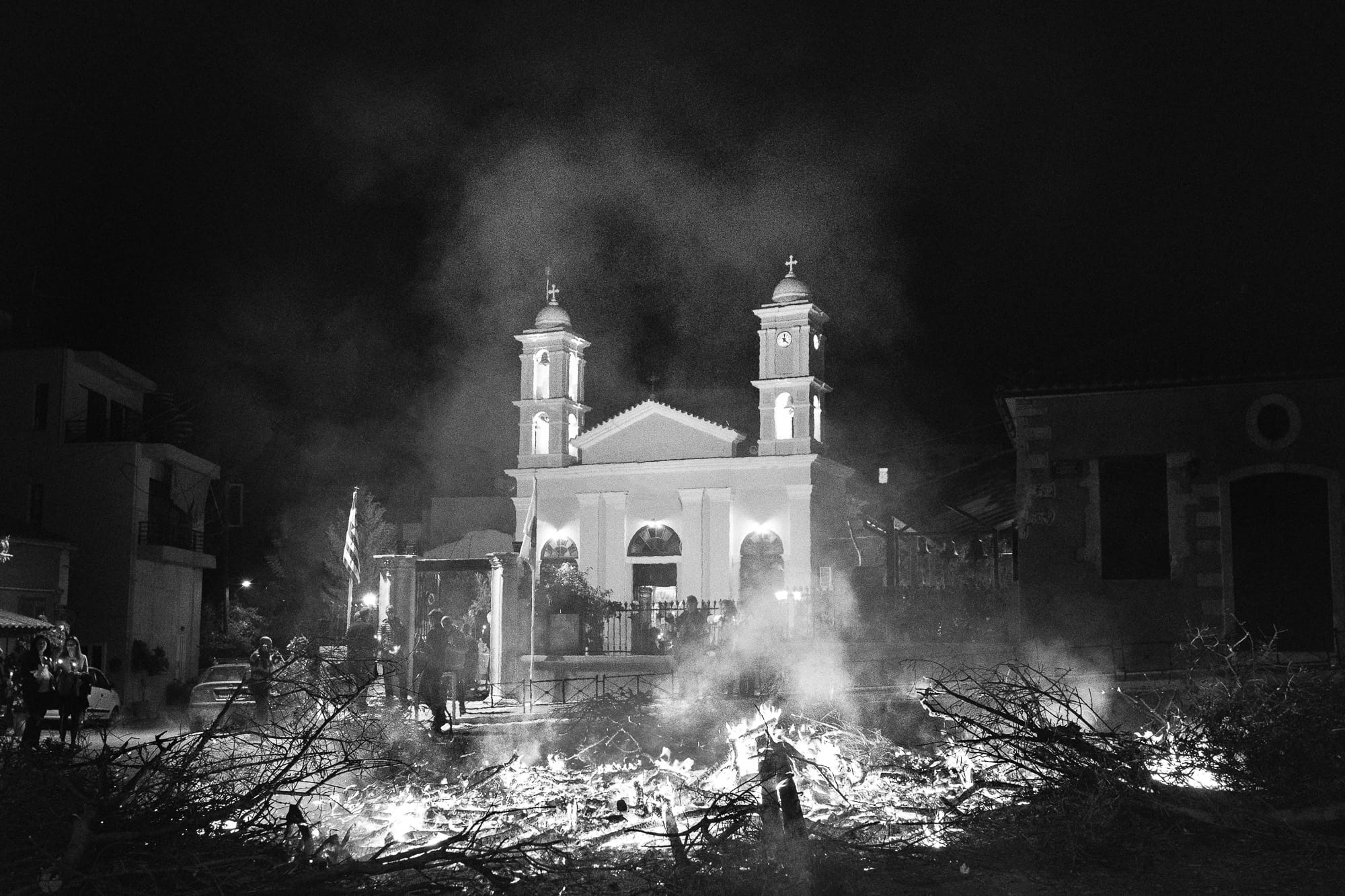
Much of the damage in our organising is done by things we never agreed to do.
It was 2008 and I’d arrived in Brussels six months earlier, the centre of EU power, fresh from the private sector and ready to use my skills to Make Change Happen. I was leading the comms department at an EU NGO, which consisted of me and half a colleague, who organised events with the rest of her week.
Now, every NGO produced an annual report, and it was a big deal. They were like expensive glossy magazines, sometimes 40, 50, 70 pages long. Ostensibly the NGOs made them for their funders. But I soon realised the real reason was that the grey hairs in leadership really loved their annual reports. Unlike the earnest words expressed in meetings and emails, this was a physical artifact, a testament to another year of fighting the good fight, something hefty they could gesture to in meetings. Especially whenever their budgets were being questioned.
The staff who had to produce these reports, though, dreaded them. Because they took months to compile — the photos, the charts, the media hits, the acknowledgements and the contributions that every senior person wanted in there. Then weeks of working with a graphic designer to prettify it and make it real. And once it was printed, another few days of sending it to everyone in Brussels who mattered, before you could get back to work and continue the next year of uphill effort. The fruits of which you would be once again compiling and curating, nine months from now.
When it fell to me to do my first annual report, I wondered if this was all necessary. But I had an advantage: my boss, who led the NGO staff, wasn’t like the others. She was smart, dynamic, open to new ideas. I went through our funding agreement: the only actual requirement was a list of activities the NGO had done during the year. That was it.
So I tried a different approach: not a 70-page book, but a one-page leaflet. It was square, and folded twice; you opened it to reveal a message from the director and president. And with one more open, there was a visual timeline of the year, with arrows and photos showing everything we’d done and achieved, and a legend to make it clear. It took a while to develop, because it was a first, but I was proud of it.
On publication day, the reaction was split. My boss loved it; my staff colleagues found it interesting (although some wondered when I would produce the actual report – “no, this is it”, I told them). But presenting it to the grey hairs in the management committee got me blank stares. It was a leaflet; it was light. To them it felt, I think, unserious. For the first time in the whole process I felt awkward, like I’d brought dogshit onto someone’s rug. I’d struck a nerve; I’d touched an assumption that shouldn’t be questioned. A ritual.
I thought of all this when I saw UN Special Rapporteur Francesca Albanese’s comments about the flotilla strategy in a speech a few weeks ago.
The flotilla, of course, is the long-running tactic of sending boats loaded with aid and activists to break Israel’s naval blockade of Gaza. It’s been done 37 times. Since 2010, Israel has intercepted every boat in international waters and detained everyone on board. The blockade hasn’t broken.
With each flotilla, pro-Palestine organisers have dutifully supported those who put themselves in harm’s way to do something, anything, to stop this criminal blockade. I count myself among them. But I can’t remember any of us ever asking: is this working?
In an unprecedented move, Albanese went there. After some preamble — “I think you may want to wait for the applause till the end. I don’t think you will be very happy to listen to me this time” — she went all-in.
The 38th flotilla, she said, was looking a lot like the previous 37: heavy on buzz and photo ops, light on the kind of coordinated disruption that might actually move things. “It’s becoming more and more like the environment I’m used to be in,” she said. “The United Nations.” I wish I’d been there to sense the reaction in that room.
Her broader point was that performance on its own isn’t enough. Palestinian civil society had been doing the slower, harder work for decades — legal cases against complicit companies, port workers refusing to load arms, the BDS movement, supply chain disruption — and the flotilla wasn’t really coordinating with any of them. “Movement without direction is chaos,” she said. The goal isn’t to declare resistance. It’s to disrupt the material infrastructure that sustains it. “Don’t try to institutionalise the revolution that you are. You cannot block the wind in a jar.”
She did get applause. But from what I can tell, the reaction since her speech has been generally muted. No major backlash in the organising community, but no strategic rethink either.
That’s hardly a surprise, given that Israel is still holding two flotilla members. But at least she said it. At least she asked if the ritual was working. It’s a start.
Here’s where I’m going with this. Since Brussels, I’ve come to see these rituals everywhere — in our organising work, in my clients. They may be in your work too. And they seem to be getting worse, just when they need to be dismantled most. Albanese’s comments crystallised the problem for me.
The rituals can be tactical (the protest that always takes the same route to the same square in front of parliament). Or organisational (we start every meeting with a roll call). Or even linguistic (‘standing in solidarity’ as a substitute for action). They can be assumptions about strategy itself: the idea that “raising awareness" is a theory of change. They are the terms that once sharpened our thinking, and now limit it. They’re habit.
I’m not saying all repetition is bad. The 37 flotillas didn’t break Israel’s blockade, but they did sustain a solidarity infrastructure that arguably fed into ICJ rulings, BDS wins, and the unprecedented mass mobilisations for Palestine since October 2023. The old annual reports weren’t pointless – they preserved a working relationship with funders who appreciated the heft.
And I’m not suggesting we start from scratch every time. A morning call with your team that runs for years can be great for keeping the work moving. Sticking with one issue across election cycles can be playing the long game, and it’s often where the real change happens. Repetition, with intention, is sometimes the whole strategy.
But that word — intention — is the key. Most rituals don’t have any. The issue isn’t whether the assumption is wrong; it’s whether it was chosen, deliberately, and whether we can remember choosing it.
Rituals are the hidden enemy in organising. They create a kind of inertia. Most of the time they lead to failure. Or worse, sometimes they lead to success — which means we’re even less likely to change them. Whole organisations get built around them, as do donor relationships… and individual identities.
When did we stop interrogating any of this?
As organisers, we’re in an asymmetric battle. We need to be nimble; we need to be honest about what’s working and what isn’t. We — more than anyone — need to be willing to question the rituals.